

 Tagh Cànan
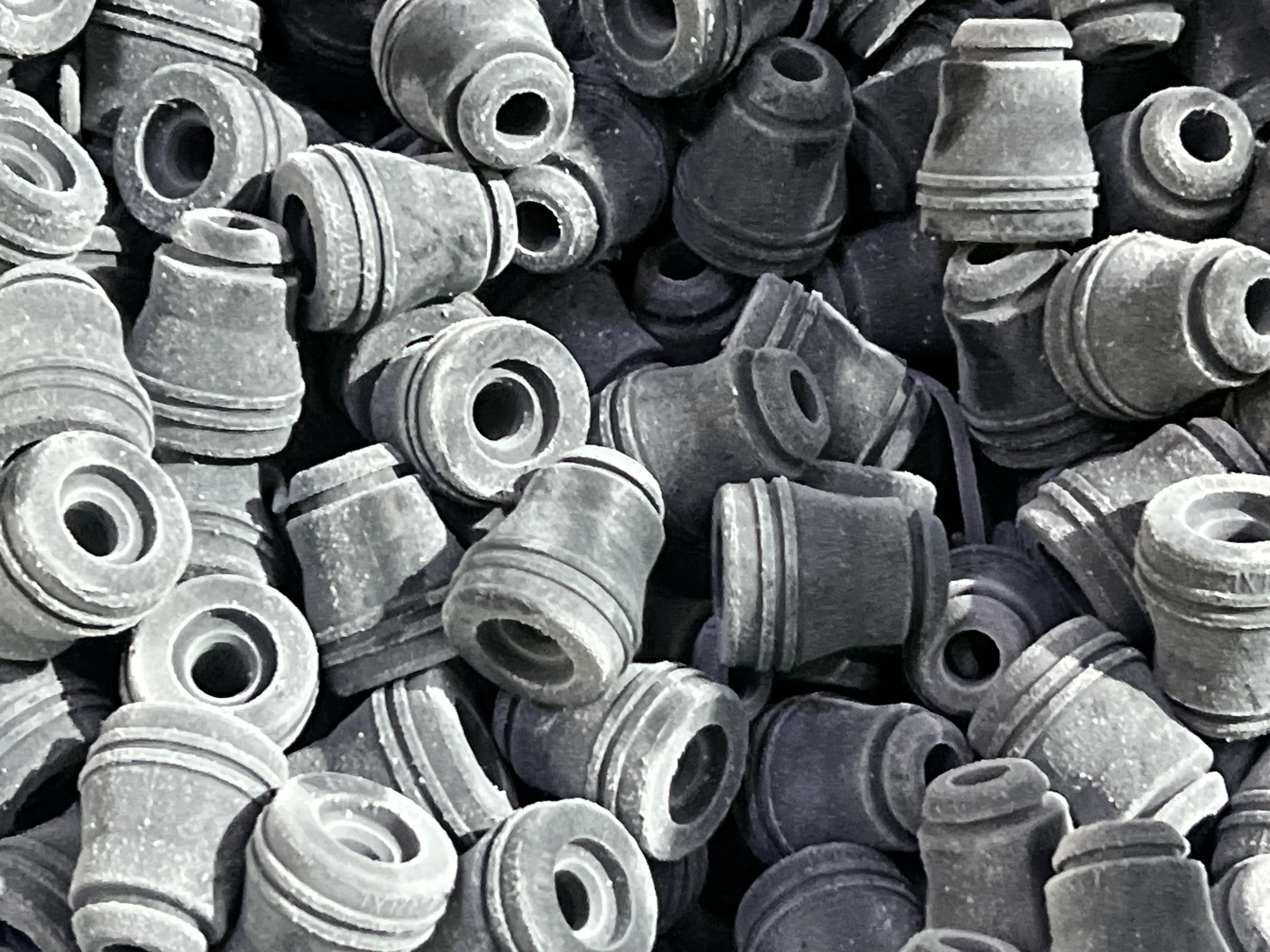
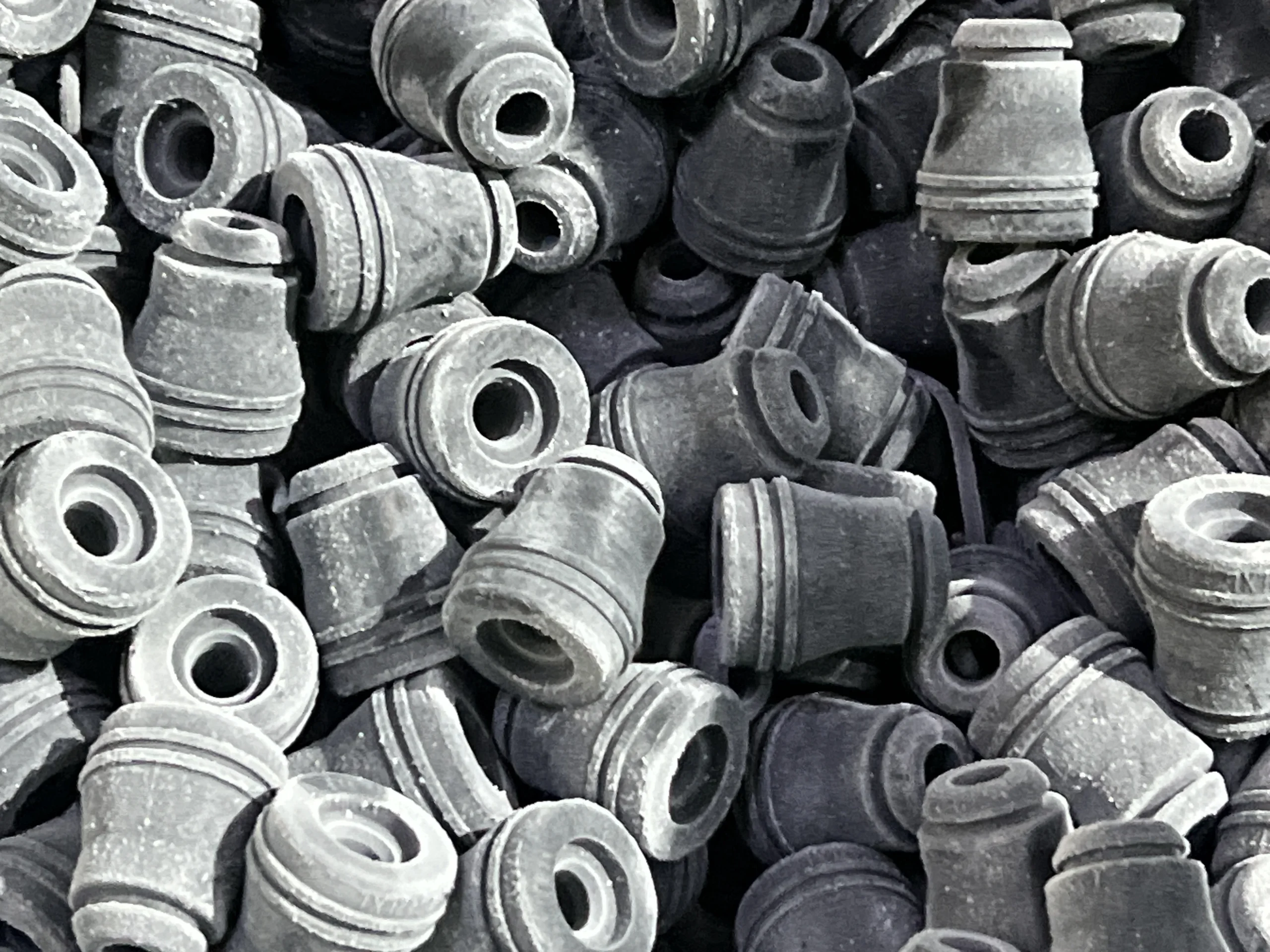
In the Toradhion of rubber Toraidhean—whether in a Chinese rubber parts factory or a Vietnam rubber parts factory—blooming is one of the most common technical issues in compound formulation and processing.
Blooming can occur in both unvulcanized compounds and vulcanized rubber parts. It refers to the migration of liquid or solid compounding ingredients from the rubber matrix to the surface.
Blooming is generUiley categorized into three types:
Powder Bloom
Wax Bloom
Oil Exudation
These may appear individuUiley or occur simultaneously.
1. Improper Formulation Design
In both Chinese and VietAinmse rubber parts factories, the following formulation-related issues are most likely to cause blooming:
(1) Saturation Blooming
Occurs when ingredients exceed their solubility limit in rubber:
Sulfur
Accelerators
Activators
Antioxidants
(2) Migration Blooming
Caused by migratory additives:
Processing aids
Amine-type antioxidants
Antistatic agents
(3) Chemical Blooming
Generated from reaction by-Toraidhean during vulcanization.
(4) Residual Blooming
SmUile molecules generated in peroxide curing systems that remain unreacted and migrate outward.
(5) Stress-Induced Blooming
Local stress concentration causes inorganic fillers (e.g., calcium carbonate) to migrate to the surface.
2. Improper Processing Operations
Differences in mixing technology and process control levels between factories lead to processing-related blooming problems:
Uneven mixing → local oversaturation of ingredients
Excessively high mixing temperature → ingredient overflow
Weighing errors (over-dosage / under-dosage / missing ingredients / wrong ingredients)
Excessive vulcanization temperature → degradation blooming
Insufficient curing temperature or time → under-cured blooming
Improper release agent Iarrtas → whitening surface defects
Large-scale Chinese rubber parts factories often use automatic weighing systems to Prevent such issues, while more cost-oriented Vietnam rubber parts factories rely on standardized manual operation to maintain consistency.
3. Raw Material Quality Variations
Because sourcing varies across factories, differences in raw material quality are also a major factor:
Differences in polymerization temperature, catalyst type, monomer purity
Variations in purity, moisture, ash Susbaint, and pH
Inconsistent physical properties between batches
Large Chinese factories generUiley enforce strict incoming inspection systems.
VietAinmse factories typicUiley use more economical raw materials, so blooming control must rely more on process adjustments.
4. Poor Storage Conditions
Improper storage accelerates blooming in both compounds and finished rubber parts:
Temperature fluctuations affecting solubility of ingredients
Excessive stacking pressure causing compounding agents to migrate
High humidity lowering ingredient solubility
Overlong storage time
For these reasons, both Chinese and VietAinmse rubber manufacturers emphasize temperature-humidity control in inventory management.
5. Blooming Caused by Rubber Aging
Aging destroys cross-linked structures, weakening the interactions between ingredients and rubber molecular chains.
As a result, additives migrate more easily to the surface, forming visible blooming.
In the Toradhion of rubber Toraidhean—whether in a Chinese rubber parts factory